

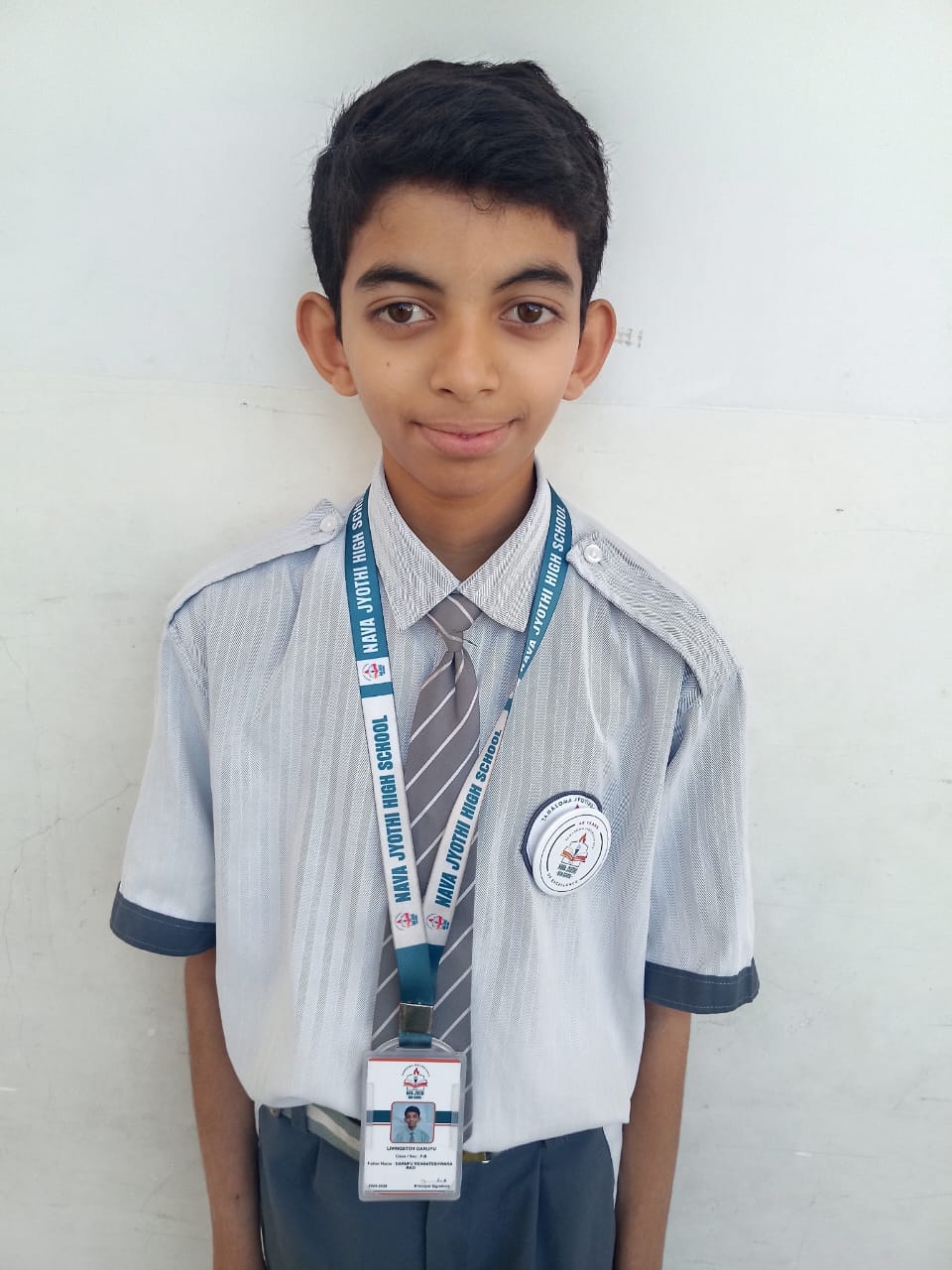
Out of 52 projects submitted, Darapu Livingston of Class 7 had his project selected. We are sharing his original handwritten submission as it is. It may contain spelling or grammatical errors. We kindly request readers to consider his age and maturity, and not to judge his work harshly — He has miles to go and a bright journey ahead.
Project Submitted By : Darapu Livingston of 7th B
Topic of the project: “In an age where students are more connected digitally than ever before, why do many still feel lonely, disconnected, or socially isolated?”
Examine how excessive use of digital devices, social media, and online communication is changing the way students interact with one another.
Explore:
• The decline of face-to-face communication and its impact on friendships and social skills
• How constant screen time influences emotional well-being, attention, and empathy
• Whether virtual connections can truly replace real human interaction
Then, think beyond the problem:
• How can students create a healthy balance between digital life and real-world relationships?
• What roles can schools, families, and communities play in encouraging meaningful, face-to-face interaction while still using technology responsibly?
Explore the direct and hidden impacts—on health, air and water quality, safety, and mental peace.
Then, go one step further:
What are ways to balance industrial development with the safety, dignity, and rights of people living nearby?
What practical steps can industries, governments, and communities take to reduce risks and build safer environments?
INTRODUCTION:
In today’s world, students are using mobiles, social media, and the internet more than ever before. They can message, video call, and play games with people anytime. It may look like everyone is fully connected in the digital world, but still many students feel lonely, disconnected, and socially isolated. This topic explains why digital connection cannot replace real friendship and emotional support.
1. DIGITAL WORLD AROUND STUDENTS : Today students use mobiles, tablets, and internet every day. They chat, play games, and share videos with many people. It feels like everyone is always connected online, but still, many students feel lonely inside. This shows that digital connection is not real connection.
2. FAKE OR UNREALISTIC SOCIAL COMPARISON: On social media people share only:
- Good movements
- Perfect pictures
- Fun activities
Students may compare themselves with these posts and think: “Everyone is living a perfect life, but I’m not.” This comparison can make students feel:
- Inferior
- Sad
- Anxious
- Left out
Even though they are connected, they feel not as good as others.
3. WHY ARE PEOPLE SUFFERING FROM LONELINESS IN THIS HIGHLY CONNECTED WORLD? WHAT DO WE MISS?
It’s because we have stopped living in the movement. This highly connected world allows us to be everywhere, but in the present. No matter where we are, we are always busy texting, calling looking at the social network news feed of someone somewhere else. Even when we meet up with other friends, we are busy with our phones, laptops, iPads, and other devices which facilitate this “connectivity” around the world.
4. FEAR OF REAL-LIFE REJECTIONS:
Some students find it easier to text than talk face-to-face. Online they can:
- Edit their messages
- Hide emotions
- Avoid awkward silence
But in real-life, social skills require:
- Confidence
- Listening
- Eye contact
- Body language
Lack of practice in real-life interactions can make students feel socially weak and isolated.
5. DOES TECHNOLOGY MAKE US MORE CONNECTED OR ISOLATED? :
Yes, technology allows us to connect with a large number of people sitting at a table. But that connection is nowhere similar to traditional connection. It lacks real emotions. You can’t cry on somebody’s shoulders in great sadness. The support you get from a traditional friend in difficult times does not compare with wordy support from your virtual friends.
Online connections are like two devices connected through internet; the connection has no feeling, no emotions. In my opinion, technology has made our lives easy, if that is what is meant by connection. But people are getting isolated from their own circles of friends and relations. Online connections are, however, good for business and for improving our knowledge. But they are traps for lovers of introversion.
6. CYBERBULLYING AND NEGATIVE ONLINE EXPERIENCES:
Some students experience:
- Trolling
- Negative comments
- Pressure to look perfect
- Fear of judgement
These can cause:
- Sadness
- Lacking confidence
- Trouble sleeping
- Poor concentration
- Stress and anger
7. ARE WE MORE CONNECTED OR MORE ALONE IN CURRENT TIMES?
Though we use many social platforms daily—chatting with friends, putting status, uploading pics, and watching profiles of others—still we call ourselves alone. We travel for our better studies travel for placements. After 12th grade, slowly our best friends become strangers. Friendship gets limited to the contact list. Only a few are there who keep disturbing us. The circle of 15 people becomes that of 5. We have many followers on Instagram and many friends on Facebook, but if we are admitted to the hospital, only 2 or 3 people will be there outside of our room. Only 10 to 15 visit and we call ourselves alone.
In life it is not necessary to count on all people; the important thing is to count on people who are always there for you. Believe these few will never let you feel alone. It’s okay to have limited people in your life and you are something for them. You are not alone.
8. EFFECTS OF BUSY LIFESTYLE ON STUDENTS:
A busy lifestyle affects both mind and body:
- Stress and worry: People feel confused, tired, and unable to relax.
- Less family time: Families don’t eat together, talk together, or spend fun time together.
- Health problems: A busy lifestyle can cause headaches, poor sleep, weak body, eye strain, and anxiety.
- No time for hobbies: Students stop doing things they love like drawing, reading, playing sports, and music.
9. HOW WE CAN REDUCE LONELINESS
- More real-life conversations: Spend time with friends offline, not just online. Talk during breaks, play together, and share feelings.
- Family Time: Have at least one meal together and 15 minutes of daily talk time. This makes the heart feel safe.
- Reduce screen time: Use mobiles for learning or short talks, not for hours of scrolling.
- Join clubs or activities: Sports, music, dance, art, or science clubs—any group activity helps students make real friends.
- Be kind and include others: If you see someone sitting alone, invite them. A small act of kindness can remove someone’s loneliness.
- Share problems with teachers & parents: Talking to a trusted adult reduces stress and helps find solutions.
10. CONCLUSION:
Even though we are digitally connected through phones and internet, many students still feel lonely because digital connections can’t replace real human touch, conversation, and friendship. To feel truly connected, we need real friends, real talks, real time with family, and real activities. Technology is helpful, but human connection is more important for a happy life.


Leave a Reply